

From Weather Risk to Yield Stability: How Flexible Fruit Cover Systems Are Reshaping Open‑Field Fruit Production
Across the world fruit growers are facing a new reality. Weather volatility is increasing, and crops such as strawberries, blueberries, cherries, raspberries and grapes are becoming more vulnerable to heavy rainfall, heat waves, hail storms and sudden weather swings.
For growers operating in open‑field production systems, these risks translate directly into economic uncertainty. A single rain event close to harvest can cause fruit cracking in cherries, increased Botrytis pressure in berries, or significant losses in fruit quality.
As a result, fruit growers are increasingly looking for ways to protect crops without converting entire farms into expensive greenhouse operations. Flexible crop protection systems that can be installed over existing fields are gaining attention worldwide.
“Growers want protection against extreme weather, but they also want to keep the advantages of open‑field cultivation,” explains a Rovero systems engineer. “The challenge is creating a system that protects the crop without trapping heat and humidity.”
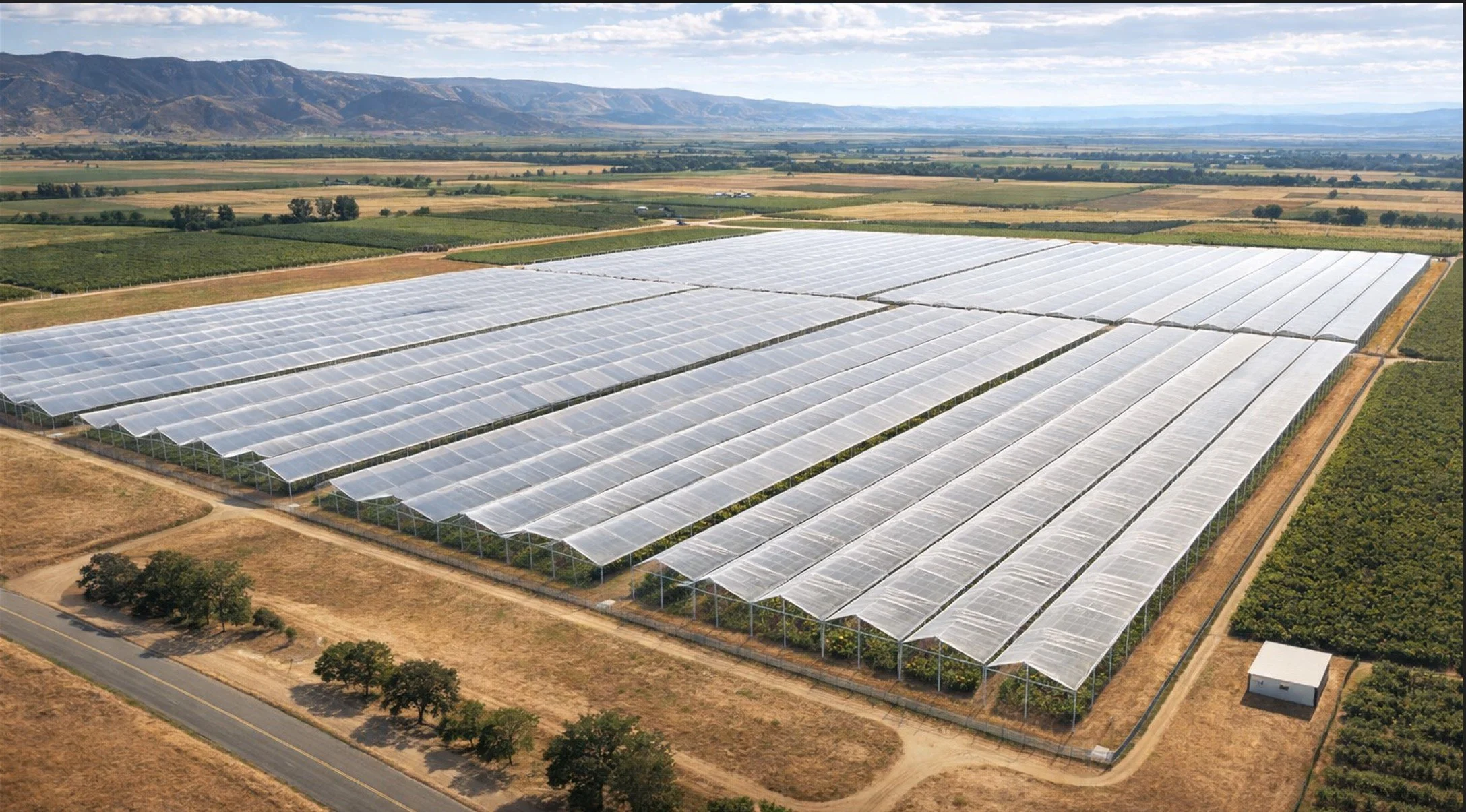
Protection without creating a greenhouse climate
Traditional plastic tunnels provide rain protection but can create new climate challenges. When temperatures rise and humidity accumulates under fixed plastic covers, crops may experience stress and fungal pressure can increase.
Modern fruit protection systems therefore focus not only on protection, but also on airflow management. Warm air and humidity naturally rise to the top of a structure, which means roof ventilation becomes critical in maintaining a healthy crop environment.
For fruit growers in warmer regions this balance is essential. Excess heat and humidity can reduce fruit firmness, increase disease pressure and affect shelf life.
Technical Insight: Diffuse Film Technology
Diffuse agricultural films distribute incoming sunlight more evenly throughout the crop canopy. Instead of intense direct light creating hotspots, diffuse light penetrates deeper into the plant structure.
This results in:
• More uniform photosynthesis
• Reduced plant stress
• Lower risk of fruit sunburn
• Improved crop uniformity
Technical Insight: Ridge Ventilation
Ventilated ridge designs allow warm and humid air to escape from the highest point of the structure while preventing rain penetration. Because warm air naturally rises, this form of ventilation is extremely effective in maintaining a balanced microclimate.
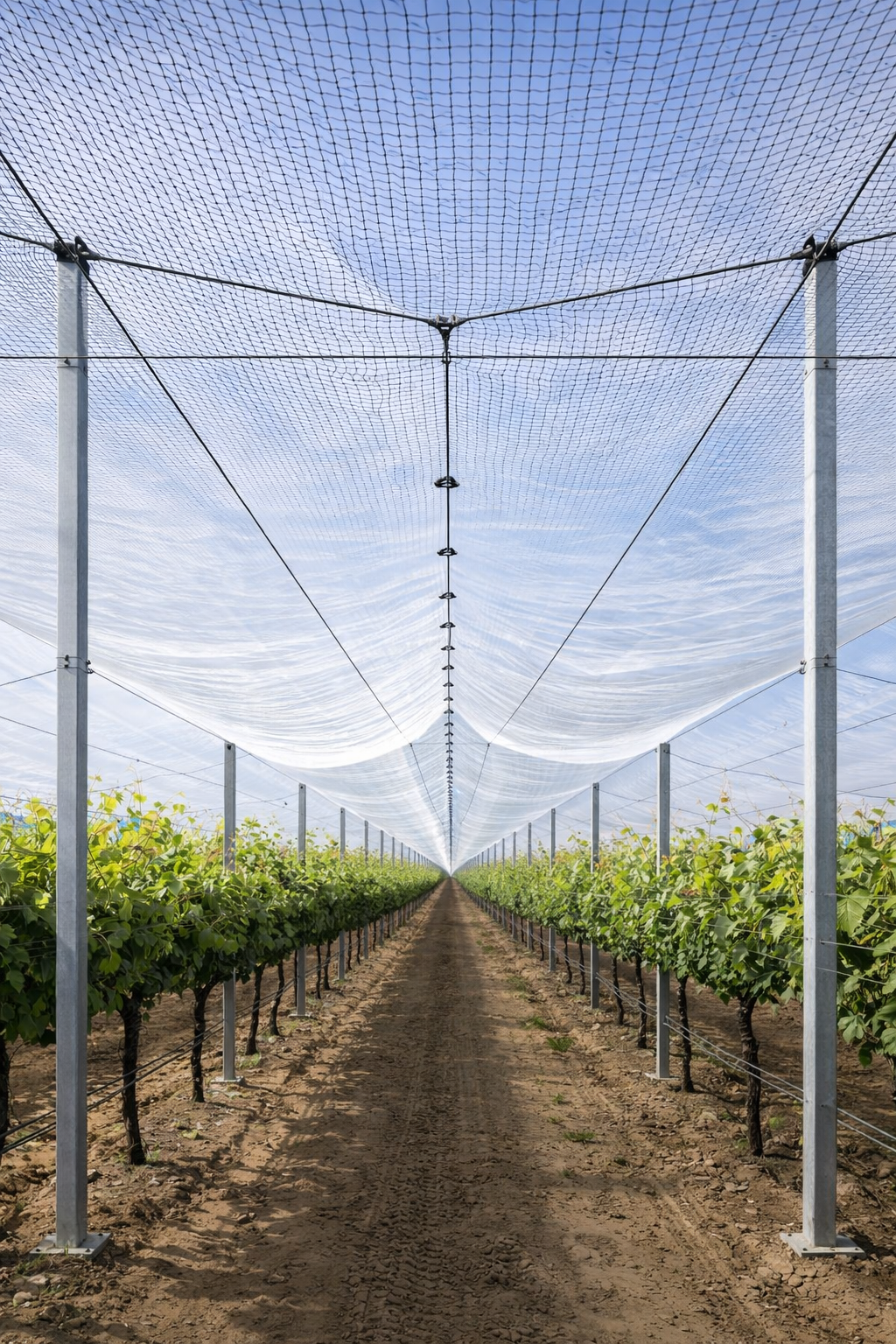
Flexible roof systems for changing weather
Another important development is the use of sliding or retractable roof sections in field covering systems. These allow growers to open the roof during stable weather conditions and close it quickly when rain, hail or strong winds threaten the crop.
This approach allows crops to benefit from natural airflow and outdoor growing conditions whenever possible while still providing protection during critical moments.
Case Insight from Fruit Growers
Fruit growers who have tested modern covering systems report improvements in crop reliability and fruit quality.
According to Dutch soft‑fruit grower Jannis van As, diffuse light plays an important role in plant performance: “Diffuse light reduces plant stress and penetrates deeper into the crop canopy. Compared to outdoor production we see improvements in productivity and fruit quality.”
Economic considerations
From an economic perspective, flexible crop protection systems sit between open‑field cultivation and full greenhouse production.
Glass greenhouses offer complete climate control but require very high investment. Flexible field covering systems provide an alternative by reducing weather‑related crop losses while maintaining relatively low infrastructure costs.
As climate variability increases, many industry observers expect flexible crop protection systems to become an essential tool for fruit growers worldwide.
“Ultimately growers want reliability,” says the Rovero engineer. “If you can protect the crop during extreme weather while still allowing the field to breathe, you create a very powerful production system.”